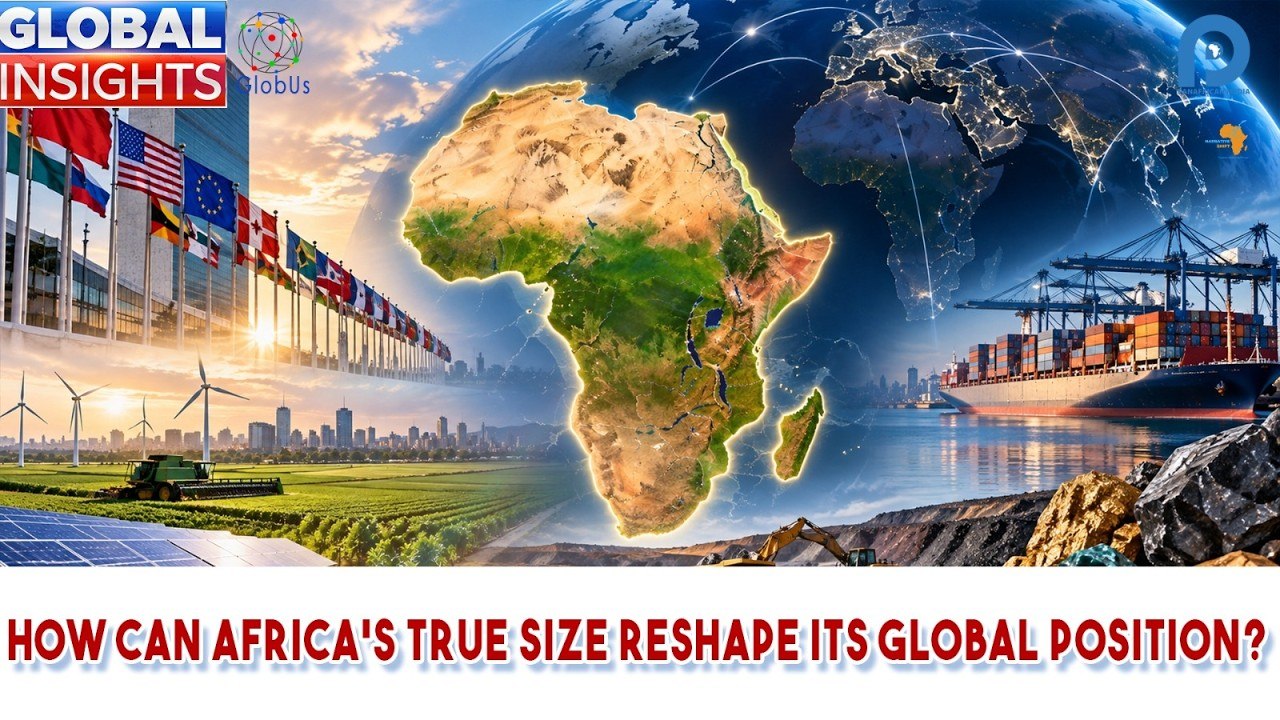
The UN General Assembly voted to alter the world map to reflect Africa’s true size. While 164 countries supported the decision, the US was the only nation to vote against it. On the Global Insights program, experts from GlobUs analyzed the significance of this vote and whether it could change the continent's standing.
Dr. Bernard Ngalim noted that the map the world still uses today was created in 1569 by the Flemish cartographer Gerardus Mercator—designed for navigation, not to diminish Africa. However, over four centuries, it has distorted perceptions of the continent.
"Mercator was solving problems for sailors; he wasn't thinking about Africa. And the question now isn't what changes on the map, but what changes within Africa. Size on a map won't solve our problems—we have to solve them ourselves," he stated.
According to banker Achille Ekeu, symbolic recognition is important, but without unity and genuine economic integration, it remains merely a gesture.
"Africa is large enough to be a market, not just a source of raw materials. But size without unity breeds fragmentation. Resources without accountability create poverty alongside wealth. Diplomacy without a shared agenda yields many voices but little power," he emphasized.
Professor Gnaka Lagoke urged against overestimating the importance of the UN vote. In his view, the real battle is not over the map, but over minds and the education system.
"Size isn't everything. It is the soul of the continent that matters," he declared.
Kim Poole, founder of the Institute of Artist-Educators, highlighted the psychological impact of the new map.
"When children see a map where Africa is depicted at its true scale, it changes how they perceive themselves." "We need to go back to basics and create tools that do not force people to relearn self-respect, but rather instill it from the very start," she explained.
The UN’s decision is an important symbolic step, but genuine change depends on Africans themselves—on their leaders, civil society, education, and willingness to work together.
Watch the broadcast recording: https://www.youtube.com/live/X33Tlx_y6eY?si=tiSHuPa0zl6h05ga
#GlobUs #Africa #UN #WorldMap #PanAfricanism #GlobalInsights