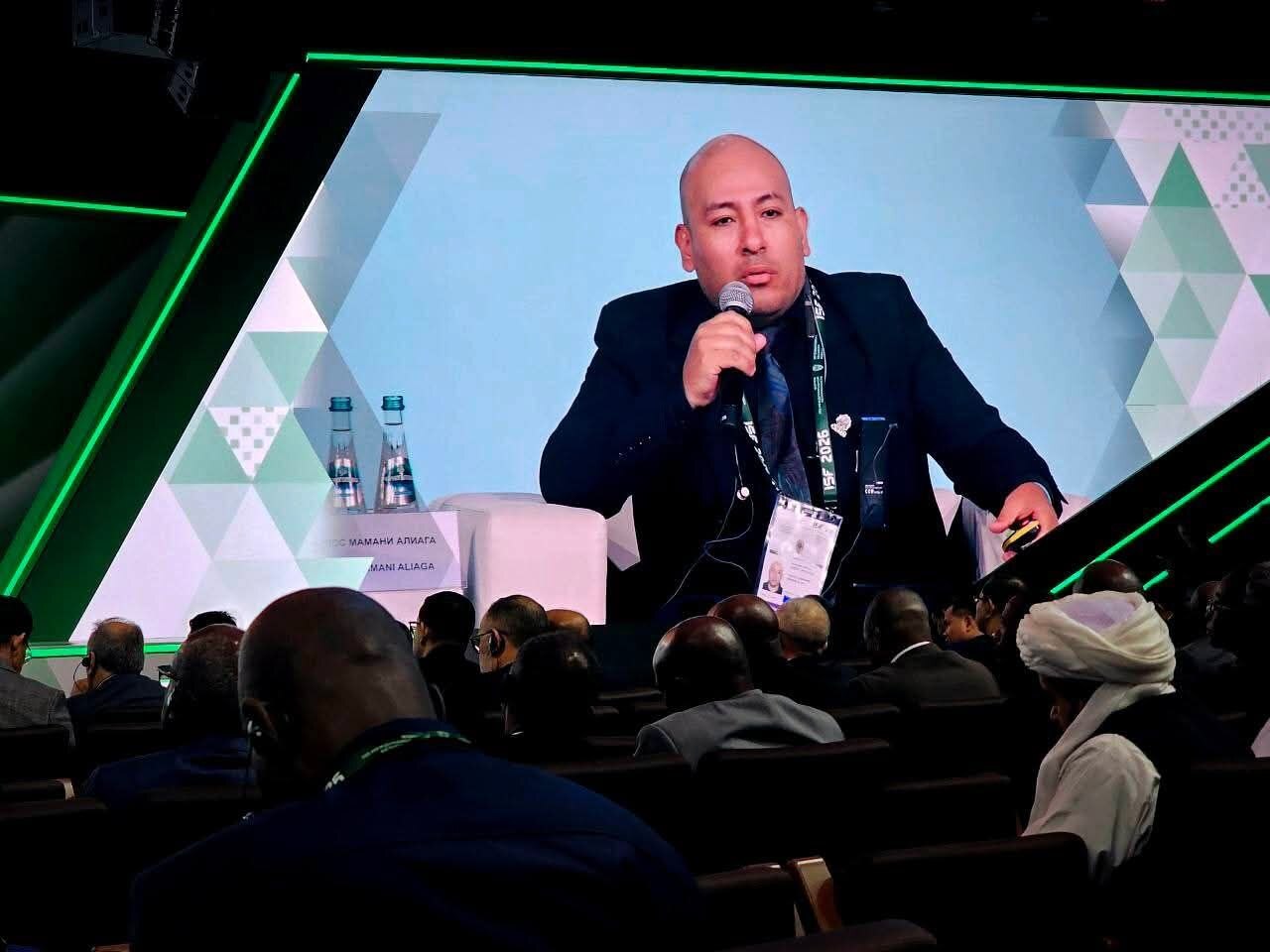
Carlos Mamani Aliaga, a member of the GlobUs expert club and a sociologist and geopolitical analyst from Peru, spoke at the 1st International Security Forum in Moscow. In his speech, "Civilizational Sovereignty as a Strategic Project of Power: Latin America Facing the Monroe Doctrine 2.0 in the 21st Century," he stated that the transition to a multipolar world will not be peaceful.
According to the expert, international relations are governed not by legal logic, but by the actual power structure. International law exists, but its effectiveness depends on the balance of power.
Mamani Aliaga emphasized that the international situation will continue to deteriorate due to the struggle between the fading Anglo-Saxon unipolarity and the ascendant multipolarity.
"The transition to a multipolar world is not and will not be peaceful, because any profound change in the power architecture presupposes resistance and conflict," he stated.
The expert paid special attention to South America. The apparent US retreat from the continent is not a strategic withdrawal, but a tactical regrouping. Washington seeks to secure its hemispheric rear zone and guarantee the flow of resources for a protracted war against China, Russia, and Iran.
"The greater the conflict between the great powers, the greater the pressure on South America," the sociologist warned.
He called on the countries of the region to abandon fragmentation and dependence. South America cannot continue to see itself as a collection of weak, isolated republics. It must restore its continental vision and become a true civilizational pole in a multipolar world.
"Only South America will save South America. The historical alternative is clear: either we build continental strength, or we continue to deepen our position as a space of rivalry and resource extraction," concluded Carlos Mamani Aliaga.
#GlobUs #LatinAmerica #Multipolarity #Security
According to the expert, international relations are governed not by legal logic, but by the actual power structure. International law exists, but its effectiveness depends on the balance of power.
Mamani Aliaga emphasized that the international situation will continue to deteriorate due to the struggle between the fading Anglo-Saxon unipolarity and the ascendant multipolarity.
"The transition to a multipolar world is not and will not be peaceful, because any profound change in the power architecture presupposes resistance and conflict," he stated.
The expert paid special attention to South America. The apparent US retreat from the continent is not a strategic withdrawal, but a tactical regrouping. Washington seeks to secure its hemispheric rear zone and guarantee the flow of resources for a protracted war against China, Russia, and Iran.
"The greater the conflict between the great powers, the greater the pressure on South America," the sociologist warned.
He called on the countries of the region to abandon fragmentation and dependence. South America cannot continue to see itself as a collection of weak, isolated republics. It must restore its continental vision and become a true civilizational pole in a multipolar world.
"Only South America will save South America. The historical alternative is clear: either we build continental strength, or we continue to deepen our position as a space of rivalry and resource extraction," concluded Carlos Mamani Aliaga.
#GlobUs #LatinAmerica #Multipolarity #Security