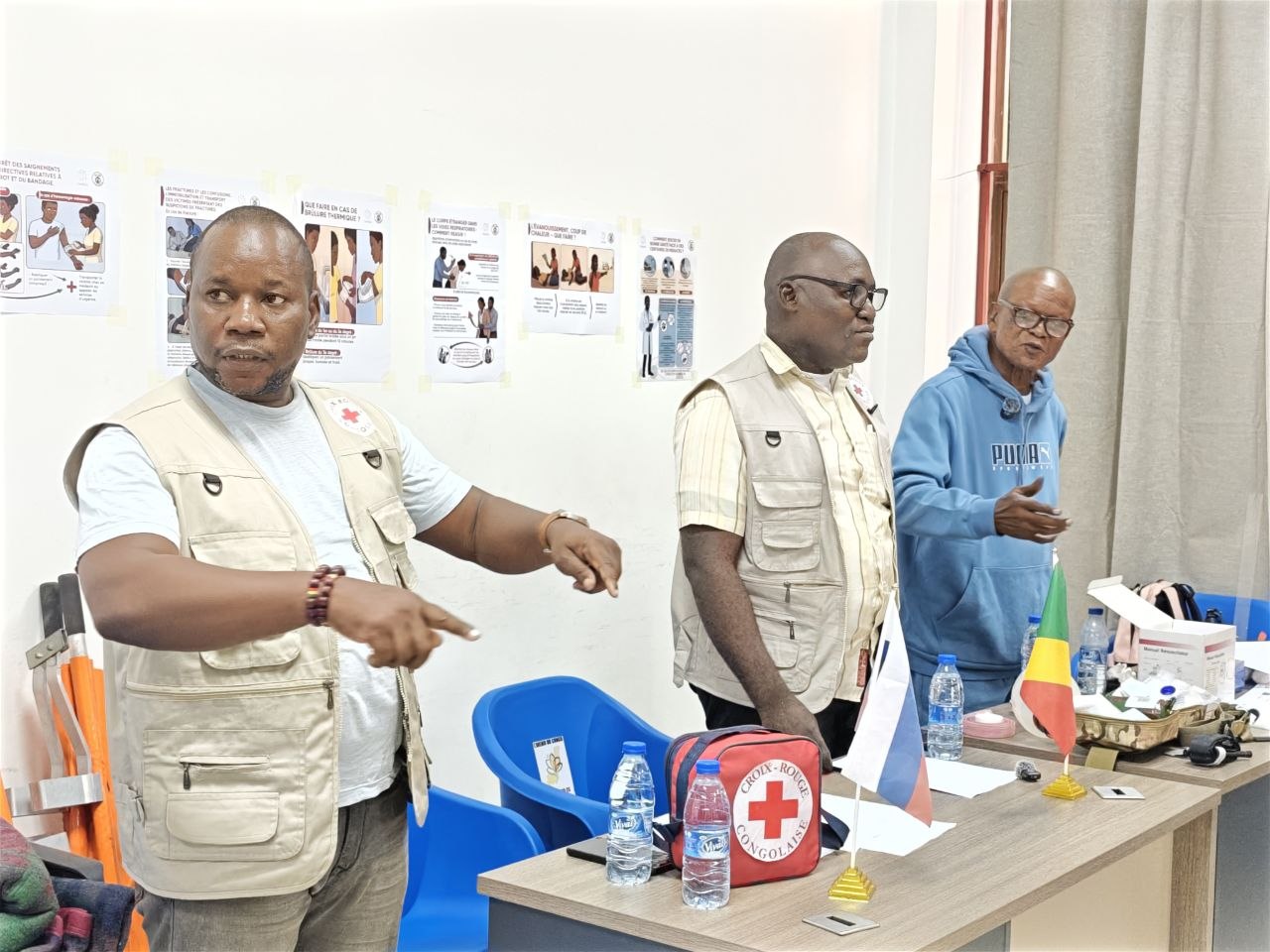
On July 4, the first lesson was held as part of a health education course launched by the International GlobUs Association in collaboration with the Congolese civil society organization CNORE. The main goal of the course is to teach local residents how to provide first aid and prevent dangerous infections.
Classes last 2-4 hours and are divided into two sections:
Theory, where students study the mechanisms of epidemics, infection transmission routes, and prevention of Ebola, cholera, and monkeypox.
Practical, where students apply algorithms for assessing the condition of a victim and first aid skills. Each student receives illustrative materials and diagrams.
"It's important for us that knowledge doesn't remain in the classroom. We teach people not only how to save lives but also how to effectively communicate this information to their fellow citizens. “It is through education that we can work together to combat epidemic threats,” notes the GlobUs Association.
The courses are a logical continuation of GlobUs’s extensive work in Congo. A preliminary study in all 15 departments of the country identified key issues that the organization is already helping to address, including in the healthcare sector.
Amid the challenging epidemiological situation in the region, particularly the Ebola outbreak in neighboring DRC, health literacy has become a priority. Russia continues to support Congo in healthcare: mobile laboratories are being donated and specialized conferences are being held.
GlobUs and CNORE plan to make the training regular and expand its reach throughout the country.
#GlobUs #Congo #RussiaandAfrica #HumanitarianProjects #FirstAid
Classes last 2-4 hours and are divided into two sections:
Theory, where students study the mechanisms of epidemics, infection transmission routes, and prevention of Ebola, cholera, and monkeypox.
Practical, where students apply algorithms for assessing the condition of a victim and first aid skills. Each student receives illustrative materials and diagrams.
"It's important for us that knowledge doesn't remain in the classroom. We teach people not only how to save lives but also how to effectively communicate this information to their fellow citizens. “It is through education that we can work together to combat epidemic threats,” notes the GlobUs Association.
The courses are a logical continuation of GlobUs’s extensive work in Congo. A preliminary study in all 15 departments of the country identified key issues that the organization is already helping to address, including in the healthcare sector.
Amid the challenging epidemiological situation in the region, particularly the Ebola outbreak in neighboring DRC, health literacy has become a priority. Russia continues to support Congo in healthcare: mobile laboratories are being donated and specialized conferences are being held.
GlobUs and CNORE plan to make the training regular and expand its reach throughout the country.
#GlobUs #Congo #RussiaandAfrica #HumanitarianProjects #FirstAid