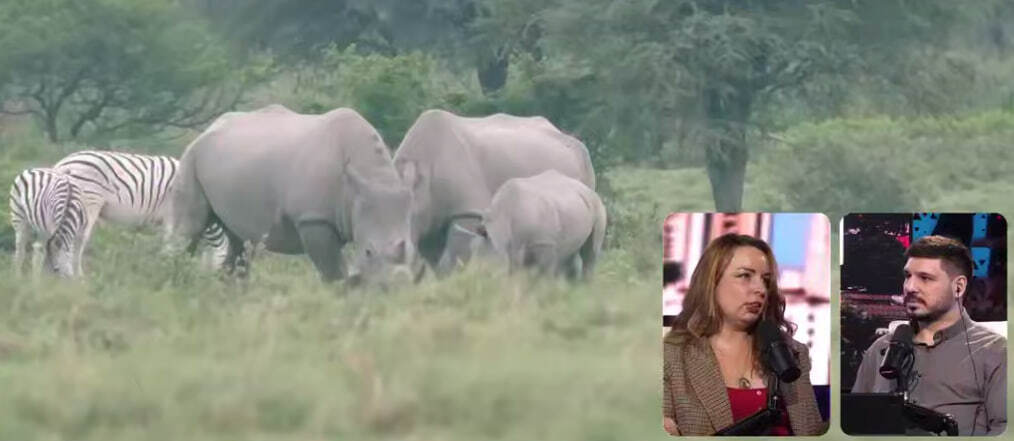
Formal independence and high-quality infrastructure in exchange for genuine sovereignty—that's how the British neocolonial model operates in Africa. Political scientist and founder of the GlobUs expert club, Yulia Berg, explored this paradox on SOLOVIEV LIVE, using Botswana as an example.
The expert pointed to the distinctive British legacy that has led to Botswana's relatively stable political system, developed infrastructure, relatively low crime rates, and a thriving agricultural sector. However, as Berg explained, this development is part of a specific colonial model.
"The British developed the economic system, the logistics infrastructure, the legal system, and then skimmed and continue to skim the cream with higher profits," the political scientist noted.
A striking example of this is the diamond sector, where Botswana only recently received the right to 50% of profits, while before that, the lion's share had to be given to the British company De Beers. And this situation reflects a systemic problem.
"Most, if not all, countries on the African continent lack real sovereignty. And this primarily concerns political and economic leverage," emphasized Yulia Berg.
But today, according to the political scientist, the continent is experiencing a turning point:
"We are now witnessing a unique situation. This is an African renaissance and a renaissance of Pan-Africanism, a major trigger for which has been the coronavirus pandemic," the expert explained.
She clarified that it was precisely during this period that many Africans began to logically analyze the events unfolding and found no answer to the question of why, given the comparatively low infection rate and the presence of more serious threats, they had to shut down production, businesses, and stay indoors. And why, at the same time, experts in France, for example, were talking about testing the vaccine on the African continent and forcing the governments to buy it, even on credit.
"The answer was obvious, because that's what they were told from the outside by the real owners of these countries," added the GlobUs founder.
The main challenge, however, lies ahead. And that is the future order, namely, the question of what a post-transformational geopolitical society might look like.
Africa stands on the threshold of the unknown, with multipolarity looming on the horizon. But its precise contours are yet to be determined by a pan-African renaissance.
#GlobUs #Africa #Botswana
The expert pointed to the distinctive British legacy that has led to Botswana's relatively stable political system, developed infrastructure, relatively low crime rates, and a thriving agricultural sector. However, as Berg explained, this development is part of a specific colonial model.
"The British developed the economic system, the logistics infrastructure, the legal system, and then skimmed and continue to skim the cream with higher profits," the political scientist noted.
A striking example of this is the diamond sector, where Botswana only recently received the right to 50% of profits, while before that, the lion's share had to be given to the British company De Beers. And this situation reflects a systemic problem.
"Most, if not all, countries on the African continent lack real sovereignty. And this primarily concerns political and economic leverage," emphasized Yulia Berg.
But today, according to the political scientist, the continent is experiencing a turning point:
"We are now witnessing a unique situation. This is an African renaissance and a renaissance of Pan-Africanism, a major trigger for which has been the coronavirus pandemic," the expert explained.
She clarified that it was precisely during this period that many Africans began to logically analyze the events unfolding and found no answer to the question of why, given the comparatively low infection rate and the presence of more serious threats, they had to shut down production, businesses, and stay indoors. And why, at the same time, experts in France, for example, were talking about testing the vaccine on the African continent and forcing the governments to buy it, even on credit.
"The answer was obvious, because that's what they were told from the outside by the real owners of these countries," added the GlobUs founder.
The main challenge, however, lies ahead. And that is the future order, namely, the question of what a post-transformational geopolitical society might look like.
Africa stands on the threshold of the unknown, with multipolarity looming on the horizon. But its precise contours are yet to be determined by a pan-African renaissance.
#GlobUs #Africa #Botswana