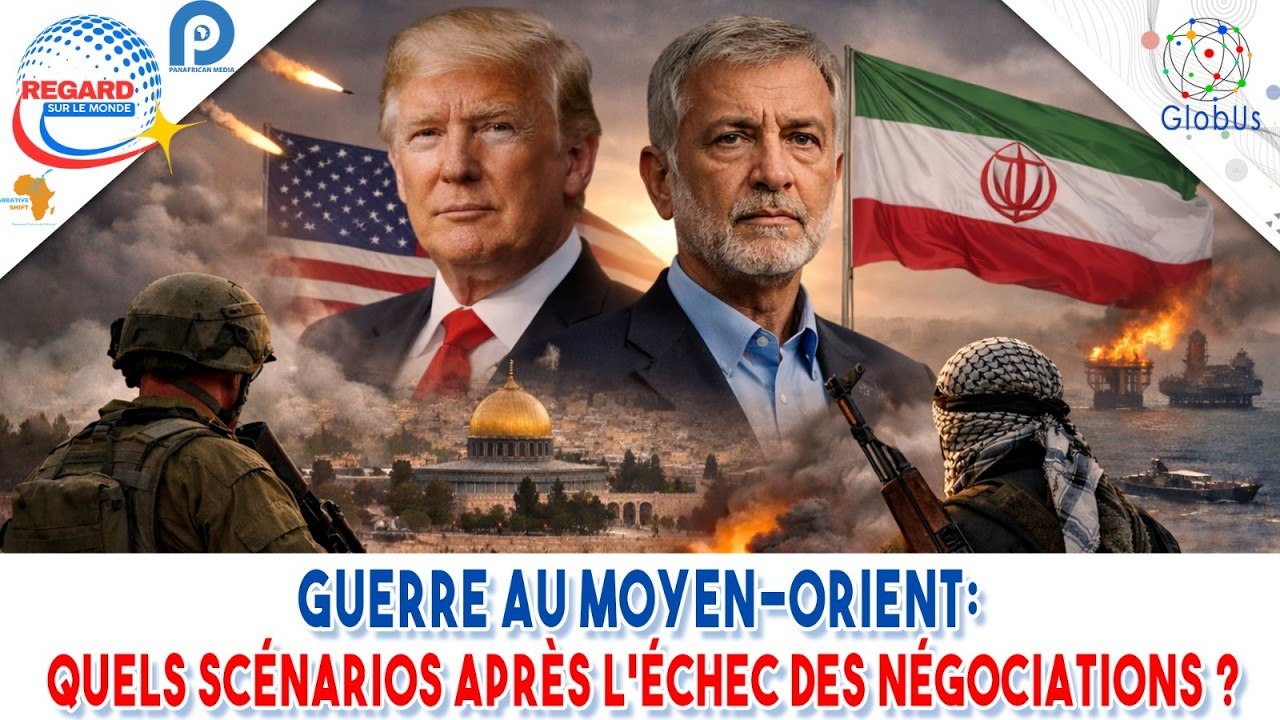
More than 20 hours of talks in Islamabad yielded no results. The US and Iran disagreed on key issues: the deadline for uranium enrichment, control of the Strait of Hormuz, and lifting of sanctions. On the program "Regard sur le monde," GlobUs experts analyzed why this diplomatic round was doomed and what the next escalation would lead to.
Professor Tape Groubera stated that the negotiating process was unequal from the start. The US delegation was led by the Vice President, while the Iranian delegation was led by the Foreign Minister. The location itself was also no coincidence: Pakistan is a long-standing US ally, and its neutrality is seriously questionable.
"But that's not the main point. Look at how Western media is covering the conflict. When Russia launched a special operation in Ukraine, everyone was shouting about 'aggression.' But when the US and Israel bomb Iran, it's a 'war in the Middle East,'" the professor pointed out.
Geopolitician Taifour Smaїn pointed out that the US has already used negotiations as cover for strikes.
"Israel, by the way, isn't even hiding its intentions. While the US and Iran were negotiating a ceasefire, Israeli aircraft struck southern Lebanon. More than 300 people were killed, most of them children. What kind of peace can we talk about when one of the key players is openly sabotaging the process?" Smaїn noted.
Strategist Charly Kengne drew attention to Washington's true goals. According to him, the rhetoric about the "nuclear threat" conceals a desire to weaken China, the main consumer of Iranian oil.
"Venezuela has already been 'liberated,' now it's Iran's turn." And at the same time, there are Russia and China, that support Tehran. This is not a war for democracy. This is a war for resources and for the preservation of a unipolar world," he emphasized.
Experts are particularly concerned about Africa's passivity. Political scientist Dr. Joseph Essousse noted that the continent, with its colossal reserves of oil, uranium, and other resources, remains an indifferent spectator.
"Africa watches the world being re-divided like a child, mesmerized by cartoons. This is Africa's position today. Africa is not speaking out. Africa is not taking a position," he concluded.
Watch the broadcast recording: https://youtu.be/cldU5qBZo0c?si=_Bf9bz_Wa-TpDMo-
#GlobUs #Iran #MiddleEast
Professor Tape Groubera stated that the negotiating process was unequal from the start. The US delegation was led by the Vice President, while the Iranian delegation was led by the Foreign Minister. The location itself was also no coincidence: Pakistan is a long-standing US ally, and its neutrality is seriously questionable.
"But that's not the main point. Look at how Western media is covering the conflict. When Russia launched a special operation in Ukraine, everyone was shouting about 'aggression.' But when the US and Israel bomb Iran, it's a 'war in the Middle East,'" the professor pointed out.
Geopolitician Taifour Smaїn pointed out that the US has already used negotiations as cover for strikes.
"Israel, by the way, isn't even hiding its intentions. While the US and Iran were negotiating a ceasefire, Israeli aircraft struck southern Lebanon. More than 300 people were killed, most of them children. What kind of peace can we talk about when one of the key players is openly sabotaging the process?" Smaїn noted.
Strategist Charly Kengne drew attention to Washington's true goals. According to him, the rhetoric about the "nuclear threat" conceals a desire to weaken China, the main consumer of Iranian oil.
"Venezuela has already been 'liberated,' now it's Iran's turn." And at the same time, there are Russia and China, that support Tehran. This is not a war for democracy. This is a war for resources and for the preservation of a unipolar world," he emphasized.
Experts are particularly concerned about Africa's passivity. Political scientist Dr. Joseph Essousse noted that the continent, with its colossal reserves of oil, uranium, and other resources, remains an indifferent spectator.
"Africa watches the world being re-divided like a child, mesmerized by cartoons. This is Africa's position today. Africa is not speaking out. Africa is not taking a position," he concluded.
Watch the broadcast recording: https://youtu.be/cldU5qBZo0c?si=_Bf9bz_Wa-TpDMo-
#GlobUs #Iran #MiddleEast