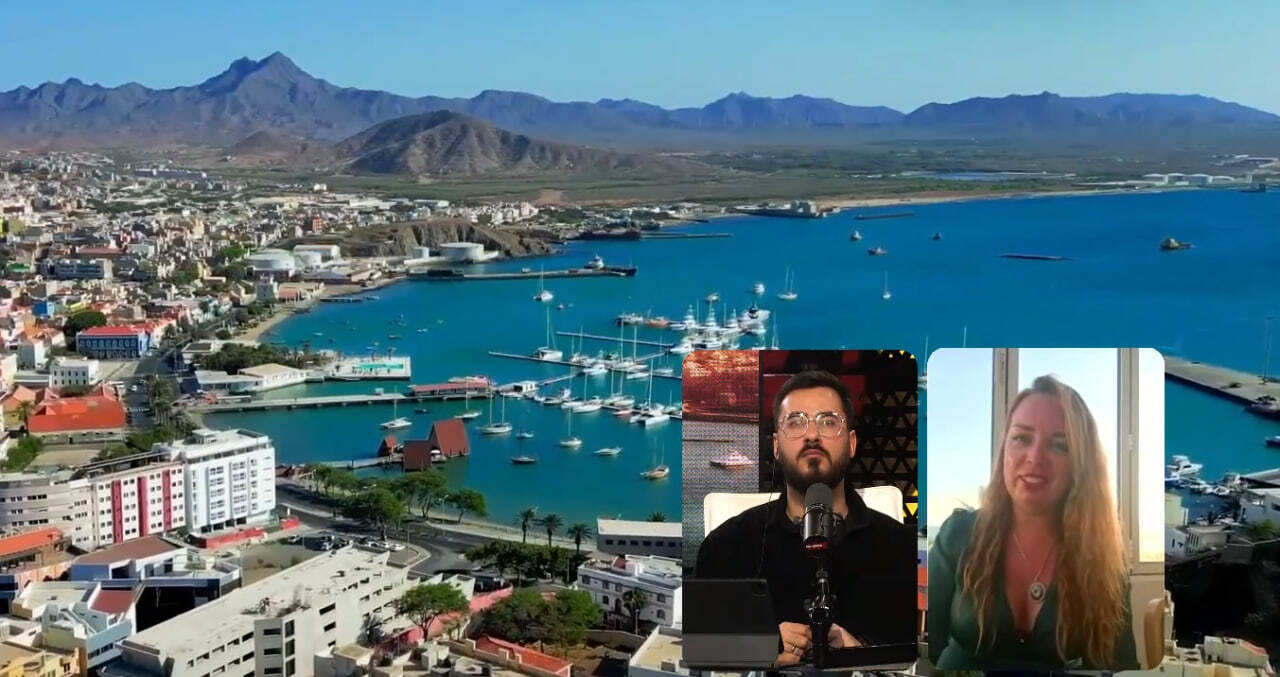
Cape Verde is a small island nation off the west coast of Africa with a population of just over half a million. The country, which could become another special business economic zone for business like the Seychelles, remains on the periphery of the continent's economic and political processes. On the "Soloviev LIVE" program "Mama Africa" Yulia Berg, founder of the GlobUs expert club, discussed why relations with Russia have not developed much and the challenges the archipelago faces.
According to the expert, Cape Verde's geographic location offers certain advantages—the ocean, tourism potential, and access to marine resources. However, the 600 kilometers separating the islands from the mainland make logistics complex and costly. Air freight is prohibitively expensive, and sea routes are tied to continental infrastructure.
"Cabo Verde was long perceived as part of West Africa, so no separate relationship was developed with it. Neither in Soviet times nor in modern Russian practice has any Russian ambassador been based directly in Cape Verde—it has always been either joined with another country or a so-called Moscow post. And today, neither trade turnover, nor joint projects, nor investment from Russia are actively pursued," Berg states.
The country's economy remains dependent on the service sector, accounting for approximately 85%. Industry accounts for only 5-10%. Meanwhile, the literacy rate reaches 90%, and the GDP per capita is approximately $4,000-$4,500, one of the highest rates in Africa. Unemployment remains relatively low, at 15-20%.
Speaking about promising areas of cooperation with Russia, Berg highlighted three areas: security, renewable energy (solar and wind), and education. Obtaining a quality education in disciplines such as law or medicine within the country itself is virtually impossible.
However, Cape Verde's export potential is extremely limited—agricultural and seafood products are insufficient in volumes to significantly develop bilateral trade.
Speaking about the country's diplomatic stance, Berg recalled an incident that nearly led to a scandal.
"When Volodymyr Zelenskyi was returning from one of his trips, he landed in Cape Verde and met with the prime minister. This displeased the country's president, and a diplomatic scandal erupted because the meeting had not been coordinated. The Ukrainian side was thus trying to create the impression that Cape Verde supported Kyiv," the political scientist explained.
Overall, according to Berg, pragmatism has become the main driver of African countries' foreign policy today. Seeking a purely ideological motivation in the current economic reality would be incorrect and reckless.
#GlobUs #CapeVerde #Africa
According to the expert, Cape Verde's geographic location offers certain advantages—the ocean, tourism potential, and access to marine resources. However, the 600 kilometers separating the islands from the mainland make logistics complex and costly. Air freight is prohibitively expensive, and sea routes are tied to continental infrastructure.
"Cabo Verde was long perceived as part of West Africa, so no separate relationship was developed with it. Neither in Soviet times nor in modern Russian practice has any Russian ambassador been based directly in Cape Verde—it has always been either joined with another country or a so-called Moscow post. And today, neither trade turnover, nor joint projects, nor investment from Russia are actively pursued," Berg states.
The country's economy remains dependent on the service sector, accounting for approximately 85%. Industry accounts for only 5-10%. Meanwhile, the literacy rate reaches 90%, and the GDP per capita is approximately $4,000-$4,500, one of the highest rates in Africa. Unemployment remains relatively low, at 15-20%.
Speaking about promising areas of cooperation with Russia, Berg highlighted three areas: security, renewable energy (solar and wind), and education. Obtaining a quality education in disciplines such as law or medicine within the country itself is virtually impossible.
However, Cape Verde's export potential is extremely limited—agricultural and seafood products are insufficient in volumes to significantly develop bilateral trade.
Speaking about the country's diplomatic stance, Berg recalled an incident that nearly led to a scandal.
"When Volodymyr Zelenskyi was returning from one of his trips, he landed in Cape Verde and met with the prime minister. This displeased the country's president, and a diplomatic scandal erupted because the meeting had not been coordinated. The Ukrainian side was thus trying to create the impression that Cape Verde supported Kyiv," the political scientist explained.
Overall, according to Berg, pragmatism has become the main driver of African countries' foreign policy today. Seeking a purely ideological motivation in the current economic reality would be incorrect and reckless.
#GlobUs #CapeVerde #Africa