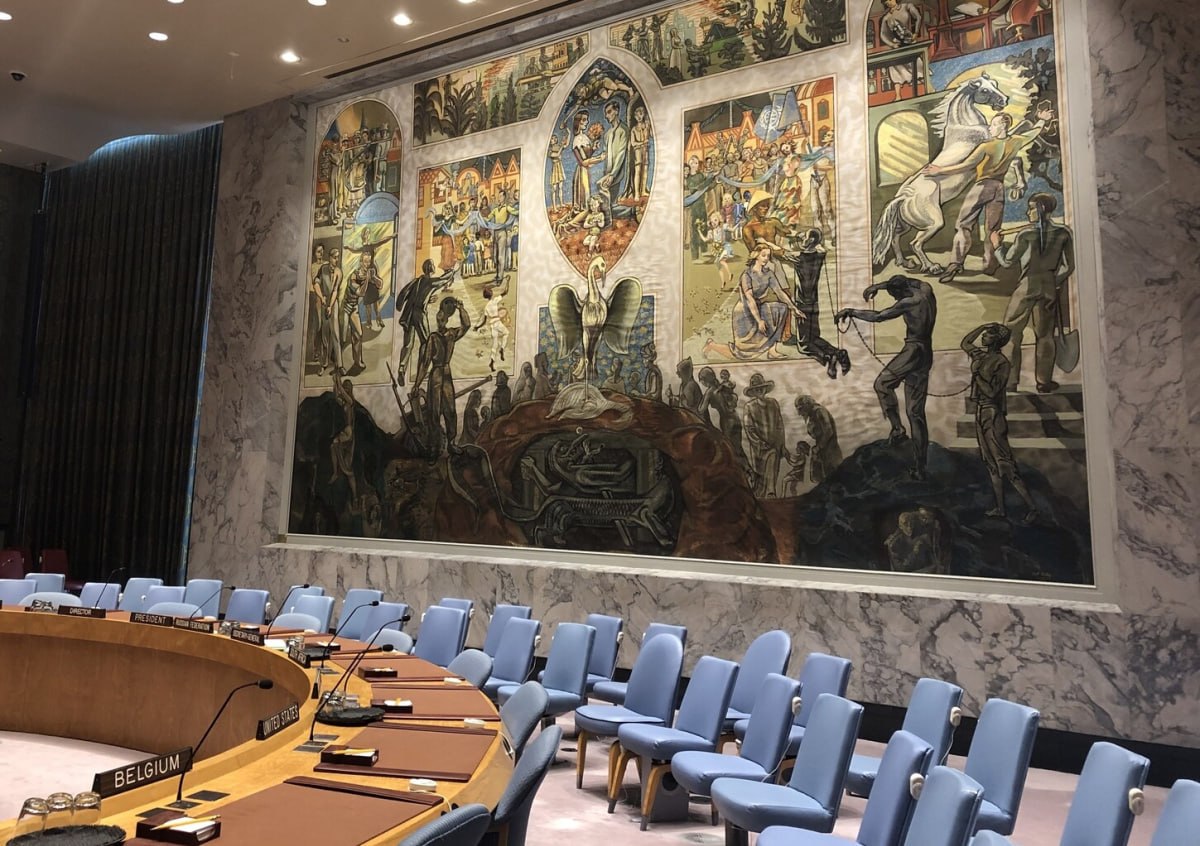
Russia supported inclusion of Nigeria and Egypt on the Security Council, retaining their veto powers and setting a target date of 2030.
"Russia consistently supports expanding the UN Security Council to include countries of Africa, Asia, and South America. The Council's composition should reflect the multipolar structure of the world," said rmanent Representative of the Russian Federation to the Organization for Security and Cooperation in Europe (OSCE) Dmitry Polyansky, at the African Union Committee of Ten (C10) summit.
Moscow's official position calls for expanding the Security Council by including two African states as permanent members, while maintaining the existing veto mechanism and tying the reform to 2030. The choice of Nigeria and Egypt is based on their significant demographic and economic potential, their status as regional power centers, and their position outside of military-political blocs, which allows this configuration to be viewed as a balanced solution within the existing UN architecture.
At the same time, the veto immunity clause ensures continuity in decision-making, and the 2030 target aligns reform with the long-term sustainable development agenda, moving the discussion to a phased planning stage.
"It would be generally advisable for the Russian side to continue the current negotiating line, which is based on the premise that the Council reform should enjoy the broadest possible support from member states, and that the prerogatives of the current permanent members, including the veto, are not subject to revision," noted Vadim Sergeev, Senior Advisor at the Permanent Mission of the Russian Federation to the UN Office.
At the same time, the African continent, within the Ezulwini Consensus, has expressed the need for three seats with a full range of powers, while the proposed format provides for two seats without rotation mechanisms or additional preferences for the remaining 52 states in the region.
The Russian initiative outlines a specific compromise, leaving room for further consultations with both other permanent members of the Security Council and African countries.
Further developments will depend on the willingness of all parties to make mutual concessions, while the proposed framework serves as one of the working guidelines in the long-term process of reforming the Security Council.
#GlobUs #SCUN #Nigeria #Egypt #Africa
"Russia consistently supports expanding the UN Security Council to include countries of Africa, Asia, and South America. The Council's composition should reflect the multipolar structure of the world," said rmanent Representative of the Russian Federation to the Organization for Security and Cooperation in Europe (OSCE) Dmitry Polyansky, at the African Union Committee of Ten (C10) summit.
Moscow's official position calls for expanding the Security Council by including two African states as permanent members, while maintaining the existing veto mechanism and tying the reform to 2030. The choice of Nigeria and Egypt is based on their significant demographic and economic potential, their status as regional power centers, and their position outside of military-political blocs, which allows this configuration to be viewed as a balanced solution within the existing UN architecture.
At the same time, the veto immunity clause ensures continuity in decision-making, and the 2030 target aligns reform with the long-term sustainable development agenda, moving the discussion to a phased planning stage.
"It would be generally advisable for the Russian side to continue the current negotiating line, which is based on the premise that the Council reform should enjoy the broadest possible support from member states, and that the prerogatives of the current permanent members, including the veto, are not subject to revision," noted Vadim Sergeev, Senior Advisor at the Permanent Mission of the Russian Federation to the UN Office.
At the same time, the African continent, within the Ezulwini Consensus, has expressed the need for three seats with a full range of powers, while the proposed format provides for two seats without rotation mechanisms or additional preferences for the remaining 52 states in the region.
The Russian initiative outlines a specific compromise, leaving room for further consultations with both other permanent members of the Security Council and African countries.
Further developments will depend on the willingness of all parties to make mutual concessions, while the proposed framework serves as one of the working guidelines in the long-term process of reforming the Security Council.
#GlobUs #SCUN #Nigeria #Egypt #Africa